I'm Looking for...
If you were an avid watcher of The Last of Us in 2023, you probably got a little concerned when you recognized one of those words in your functional mushroom powder: cordyceps.
Yep, those same brain-infecting, zombie-inducing mushrooms that have been used in traditional Chinese medicine practices for thousands of years.
Well, they’re not quite the same—while both are in the Cordyceps family, the species we consume is Cordyceps militaris or Cordyceps sinensis. Rather, Pedro Pascal was more worried about a mutant strain of Ophiocordyceps unilateralis.

Television shows aside; you may wonder if the so-called safe cordyceps actually are safe or if there are any potential side effects or dangers to look out for. In this article, we’ll detail everything you need to know about cordyceps mushroom safety and the leading health benefits.
Cordyceps is a mushroom with over 600 species—and, yes, they are all parasitic, but some are also considered medicinal mushrooms.
Although consuming a parasitic fungi doesn’t sound like it would be good for human health, there are a couple of species that have been shown to provide health benefits: Cordyceps militaris and Cordyceps sinensis (also known as Ophiocordyceps sinensis).
Most Cordyceps species infect ants and other insects, including Cordyceps sinensis, also known as the “caterpillar fungus.” It parasitizes the larvae of ghost moths and grows from the head of a dead caterpillar—but only at high elevations in Tibetan plateaus of the Himalayan mountains and some Chinese provinces.1
However, Cordyceps sinesis is very rare in the wild due to the specific environmental growing conditions necessary for it to thrive, including the fact that the fruiting body needs to grow out of the caterpillars’ heads. This makes it difficult to cultivate commercially and raises concerns about animal ethics.1
Combined with the knowledge that it’s now overharvested in the wild, Cordyceps sinesis is rarely used in supplements or clinical trials and is incredibly expensive. Some reports state it can sell for up to $40,000 per pound! Instead, we can use Cordyceps militaris, which has a similar health profile and can be grown commercially (no dead Tibetan caterpillars required).2
Both of these edible Cordyceps species have similar health benefits, but C. militaris has more of the compound cordycepin—a bioactive component that helps with inflammation, cell growth regulation, and immunity. Cordyceps also contains adenosine, a compound beneficial for energy and the cardiovascular system that supports our production of ATP. Both species provide polysaccharides called beta-glucan, which help modulate or balance proper immune cell function.3
But are there any dangers to consuming cordyceps? Let’s find out.
Again, we’re not talking about the potentially mutant sci-fi cordyceps here; this is strictly based on the edible forms of the fungi (Cordyceps militaris and Cordyceps sinensis).
Cordyceps has been used for thousands of years. Although clinical trials weren’t around way back then, no significant adverse effects have been reported in recent years.
Some minor side effects may arise, especially in higher doses, including:
However, although it’s been used for many years in traditional practices, long-term safety research hasn’t been performed, so we don’t know for sure if any side effects will arise when taking it long-term.
People who are pregnant or breastfeeding should not use cordyceps due to insufficient evidence showing that it’s safe in these conditions.
Certain medications, including diabetes drugs, may interact with cordyceps. As cordyceps may lower blood sugar levels, taking it with a blood sugar-lowering drug may cause hypoglycemia. If you’re unsure if you should be taking cordyceps in supplement form, speak with your healthcare provider first.
Cordyceps may also interact with blood thinner medications, lowering their efficacy or increasing the risk of bleeding.
Overall, the potential side effects of Cordyceps mushrooms are pretty mild—no zombie-induced brain takeovers here.
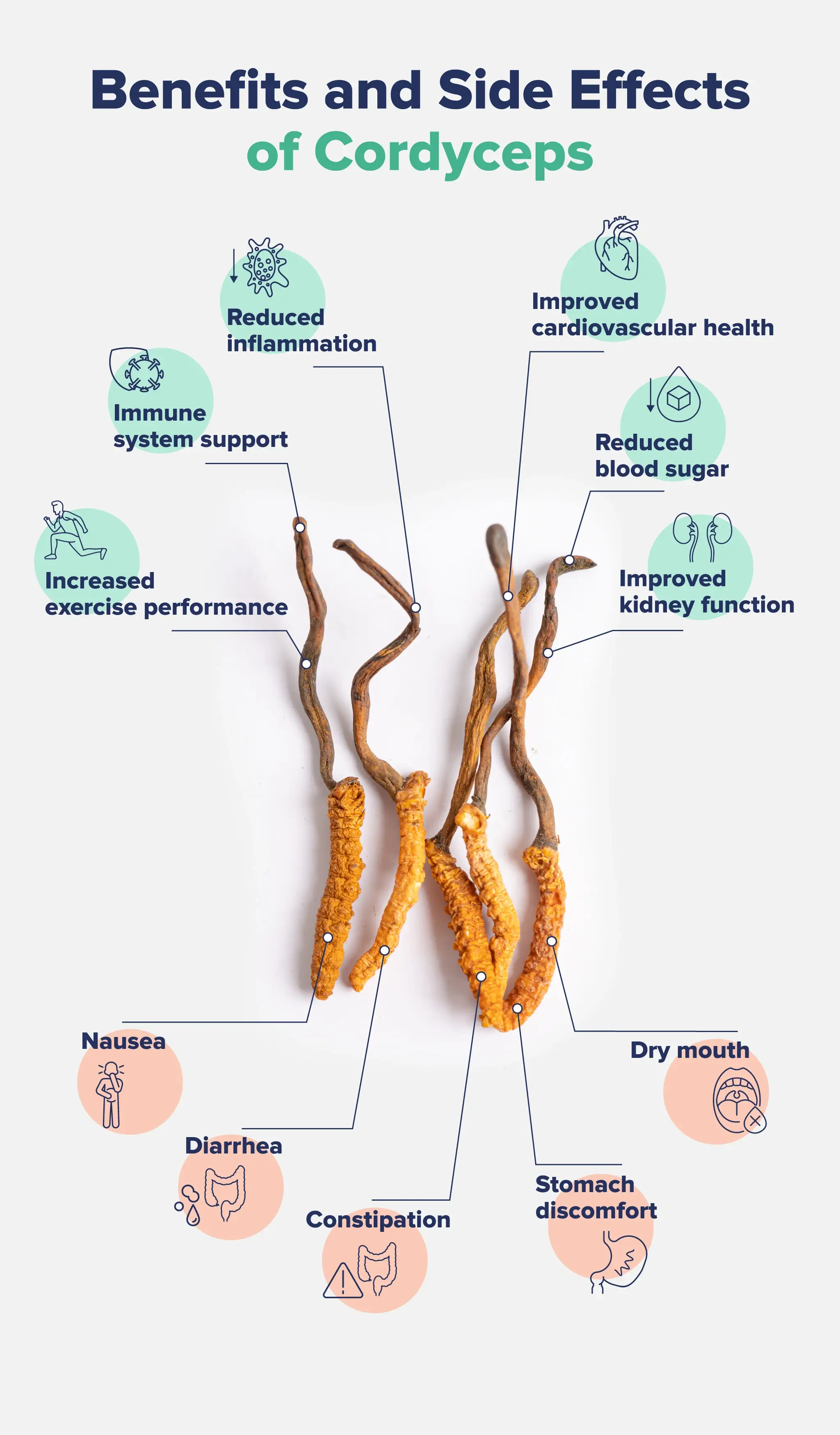
So, what does cordyceps do for the body? The primary cordyceps benefits include:
People who are pregnant or breastfeeding should avoid cordyceps, as there is not enough safety data in these populations. People on blood sugar-lowering or blood-thinning medications should speak with their doctor or healthcare provider first, as cordyceps can interact with these drugs.
Cordyceps is generally considered safe for most people, as only minor side effects have been reported. In some people, cordyceps supplementation can cause nausea, diarrhea, constipation, stomach discomfort, or dry mouth.
The cordyceps species you see in mushroom supplements and powders are not harmful to humans. While there are hundreds of types of cordyceps species, only two are used by humans: Cordyceps sinesis and Cordyceps militaris, the latter of which are almost exclusively found in U.S. supplements.
The species of cordyceps that infect insects’ brains and bodies are highly specialized, meaning they evolved specifically to infect one insect species. Cordyceps can’t take over humans because our bodies are too warm—they cannot survive in animals with a body temperature higher than 94.1 degrees Fahrenheit. As you may wonder if you’ve seen The Last of Us, will climate change allow parasitic fungi such as cordyceps to adapt to rising temperatures and ultimately infect us? Well, maybe—but not in any of our lifetimes. According to parasitic fungi experts published in National Geographic, “If the fungus really wanted to infect mammals, it would require millions of years of genetic changes.”10

“So, I can just pop one of these every day and continue to eat what I want, right?” Yeah, that’s not really the mindset this list of the six best men’s multivitamins is meant to create. When paired with a balanced diet and exercise, however, clean and whole-food-based multivitamins like Vitamin Code Men’s Multivitamin—our top pick—can significantly improve your long-term health and wellness outlook.
Read More
Is cow’s milk good for you? Learn the pros and cons, including health benefits, potential risks, and tips on choosing the healthiest type of cow’s milk.
Read More