I'm Looking for...
This post contains links through which we may earn a small commission should you make a purchase from a brand. This in no way affects our ability to objectively critique the products and brands we review.
Evidence Based Research To fulfill our commitment to bringing our audience accurate and insightful content, our expert writers and medical reviewers rely on carefully curated research.
Read Our Editorial Policy
Your ex may not have had any green flags, but these foods do.
If you think about it, the dating scene and the grocery store have a lot in common.
Whether it’s a dating app or an aisle, there’s a seemingly endless assortment of choices propped up on the shelves wearing pretty colors, artfully crafted “attire,” and adorned with descriptions to entice just the right kind of buyer.
However, most of the time, until you get to know them––like really know them––you probably have no idea what’s in store for the future.
This can be exciting! It’s a new adventure you’re embarking on, full of questions that leave your heart aflutter.
But thankfully, unlike people, we don’t have to take food products home to find out if they’re heart-healthy or not.
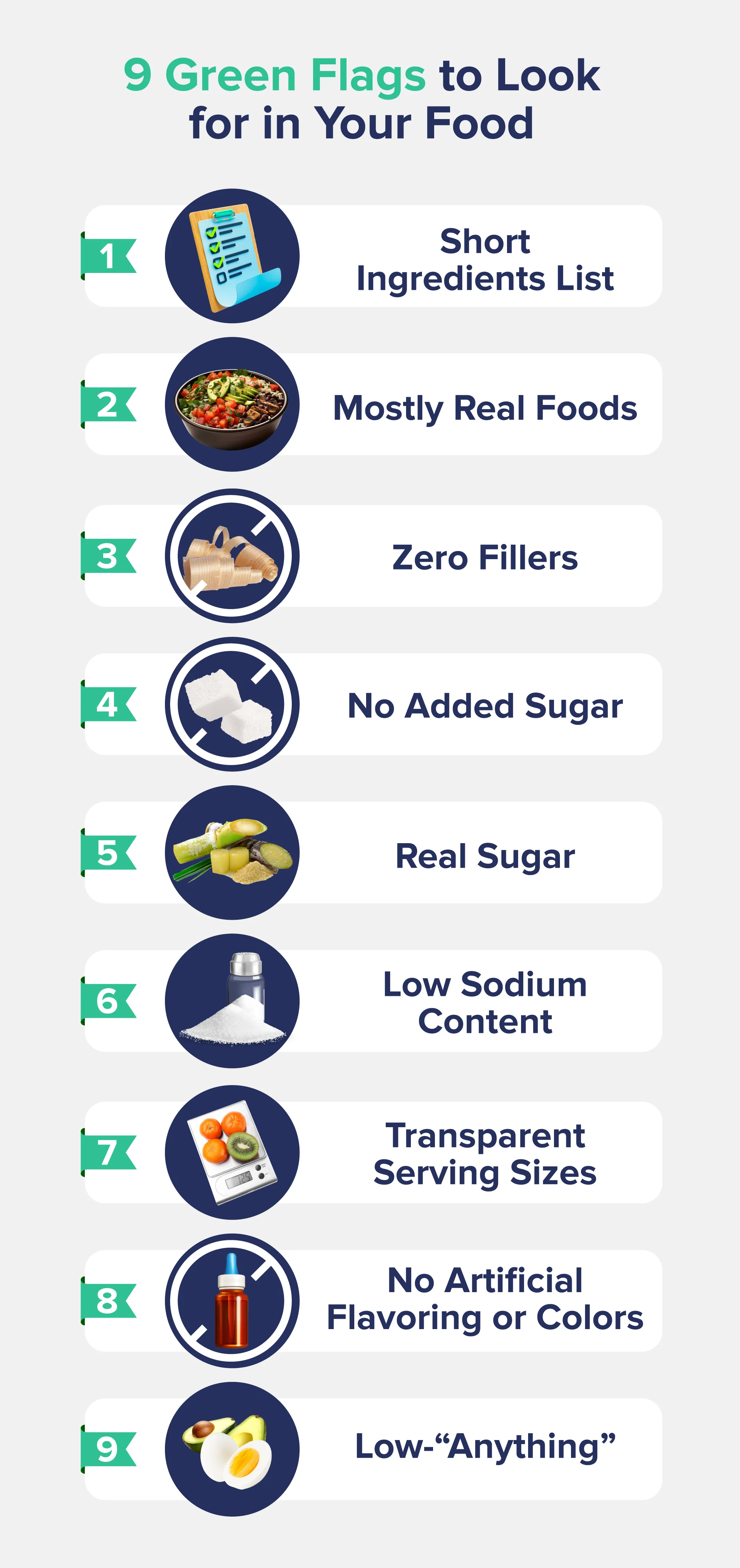
These are 9 green flags to look for when shopping at the grocery store.

When it comes to ingredient lists, the shorter the better.
With a limited number of ingredients, you can more quickly and easily tell what is in your packaged food products and determine if it is the right product for you and your family.
This reduces the chances that you’ll miss an allergen, and that the product might be filled with additives you just don’t want in your food.One product that’s a pretty good example is RXBAR––you can quickly glance at the ingredients list and know exactly what you’re putting into your body.
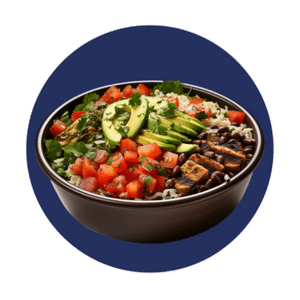
Along with shorter ingredient lists, a list that also has mostly whole foods on it is a major green flag.
By real, we mean ingredients that you can recognize almost instantly without having to Google them.
We should all be eating more whole, unprocessed foods from around the edges of the grocery store––like fruits, veggies, nuts, meat, etc.
However, when purchasing from the middle aisles, seek out products that don’t have indiscernible and difficult-to-pronounce ingredient lists with tons of fillers and additives, which brings us to our next point.

Back in 2017, an urban legend floated around the internet about how our shredded cheese is coated in wood pulp.
Well, that urban legend turned out not to be so legendary.
It turns out that some shredded cheese could contain up to 8.8% cellulose, a filler derived from wood pulp, to keep the cheese from sticking.
Food fillers like these are cheap carbohydrates often used to boost the weight of food––particularly meats––and thereby inflate margins.
Besides cellulose, the most common fillers you’ll see in ingredient lists are soy, olestra, carrageenan, and potassium bromate.
While fillers like these are FDA-approved and technically safe to eat, they are usually indigestible additives that add no nutritional value to your food and may even cause digestive issues for some.
There is also some evidence that food additives can impact our gut microbiome and contribute to obesity.
So, if you spot a product that uses zero fillers, you know you’ve caught a gem!

Almost everyone loves something sweet now and then––the TNI team included––and we would never recommend cutting sugar out of your diet entirely as there are plenty of naturally occurring sugars in nutritious and healthy foods such as fruit and sweet potatoes.
But when it comes to added sugars in processed foods, even our sweet tooths just can’t take it.
Today, sugar is added to so many foods and drinks to make them more palatable.
However, this has led to an increased consumption of sugar that has grown from a nationwide problem in the U.S. to a global epidemic and resulted in soaring rates of obesity, Type 2 diabetes, and even cardiovascular disease.
While sugar by itself is not bad for you in moderation, keeping an eye on your sugar intake is key to long-lasting health.

If you’re gonna consume sugar, new evidence shows it’s better to eat the real thing.
The World Health Organization (WHO) recently published new guidelines that caution against the use of artificial sweeteners.
Per the WHO, artificial or non-sugar sweeteners (NSS) do not help with weight control or prevention of non-communicable diseases like type 2 diabetes.
In fact, they found that NSS may increase the risks of type 2 diabetes, cardiovascular disease, and mortality in adults.
NSS includes any naturally derived or artificial sweeteners not derived from sugars that are classified as “non-nutritive” or zero-calorie sweeteners, including acesulfame K, aspartame, advantame, cyclamates, neotame, saccharin, sucralose, stevia, and stevia derivatives.
TL;DR: if you’re going to consume sugar, it’s better to do so in moderation, and if you do, you might as well eat the real thing.

We may not want to hear this, but here’s another ugly truth about our food that we’re ignoring: we’re all probably eating a bit too much sodium.
Much like sugar, food companies add sodium to their products to make them more palatable and increase shelf life.
Smoked, cured, and canned meats, salted nuts, cheese, frozen foods, pickled veggies, canned broth, and sauces are some of the biggest offenders.
While these foods can be difficult to reduce in our diets, it might be worth considering if you’re concerned about your heart health.
Primarily, eating too much sodium can lead to an increased risk of cardiovascular disease.
Fun fact: according to the World Action on Salt, Sugar, & Health, the city of Montevideo in Uruguay—where over 40% of the population has hypertension—has entirely banned table salt and salty condiments from restaurants.

The joy of finding a pre-made meal or snack with a normal amount of calories and promising macros can so quickly be dashed by the hidden serving sizes.
While we would love to have the kind of self-control where we don’t eat an entire Snickers bar, it isn’t realistic.
Food companies do this to explicitly hide the amount of calories that are in a realistic serving of food that would fill you up and not leave you starving for more.
And it’s not just candy bars; once you start to look for it, you’ll notice many food products look like they would be single-serving items, but the nutrition facts indicate there are two or even three servings in one box.
If you’re not looking closely at the serving sizes, this can be misleading, and we may assume a meal is 300 calories when, in actuality, it’s double or triple that!
We appreciate that products like Kodiak Cakes and Starkist Tuna Creations offer those on-the-go, quick, easy, and (relatively) nutritious meal options that transparently list the nutrition facts for a single serving!

We’re sure by now that most people are relatively aware that artificial colors and flavorings are no bueno.
Like most things we’ve relayed to you on this list, we want to see the real stuff––flavorings and colors derived from natural ingredients.
You can read our take on Red40 here, but, in general, if the product doesn’t indicate where the colors are derived from, we recommend you steer clear.
Also, the ingredients used to derive artificial flavorings are not required to be listed by the FDA, so people with allergens need to be particularly careful about consuming products with this listed in the ingredients.

Whether it’s low-fat or low-carb, you can’t blindly trust that these foods are actually healthier for you.
While they might seem better on the surface because they have fewer of the things you’re avoiding, these products could be hiding higher added sugars or sodium.
They could also be overly processed, “filler-ified” junk food masquerading as a health food.
Lastly, these foods are a byproduct of a toxic diet culture trying to make you believe that carbohydrates and fats are the source of all your woes, when the truth is these macros are no more harmful than protein or fiber.

There are many ways to make non-alcoholic beer, but some have found a way give NA drinkers a tasty alternative to traditional beer.
Read More
Wine connoisseur turned sober socialite? Just looking for new beverages to spice up your alcohol-free lifestyle? We’ve got the best non-alcoholic wines for you in this list.
Read More