
I'm Looking for...
This post contains links through which we may earn a small commission should you make a purchase from a brand. This in no way affects our ability to objectively critique the products and brands we review.
Evidence Based Research To fulfill our commitment to bringing our audience accurate and insightful content, our expert writers and medical reviewers rely on carefully curated research.
Read Our Editorial Policy
Vitamin C is one of the most important vitamins our bodies need to function, and as flu season comes into full swing, getting enough of this essential vitamin is more important than ever.
While you could supplement with vitamin C capsules, gummies, or powders, one of the best ways to increase your intake is to eat more fresh fruits and vegetables.
One of the best foods to get more vitamin C is to eat citrus fruits like oranges. But how much vitamin C is actually in an orange, you ask?
We’ll not only answer this question in detail but also how much vitamin C you should be consuming, other health benefits of oranges, whether the fruit or the juice is better, and other foods you can eat to boost your vitamin C intake.
If you’re ready for all that and more, grab your juicers, and let’s dive in!
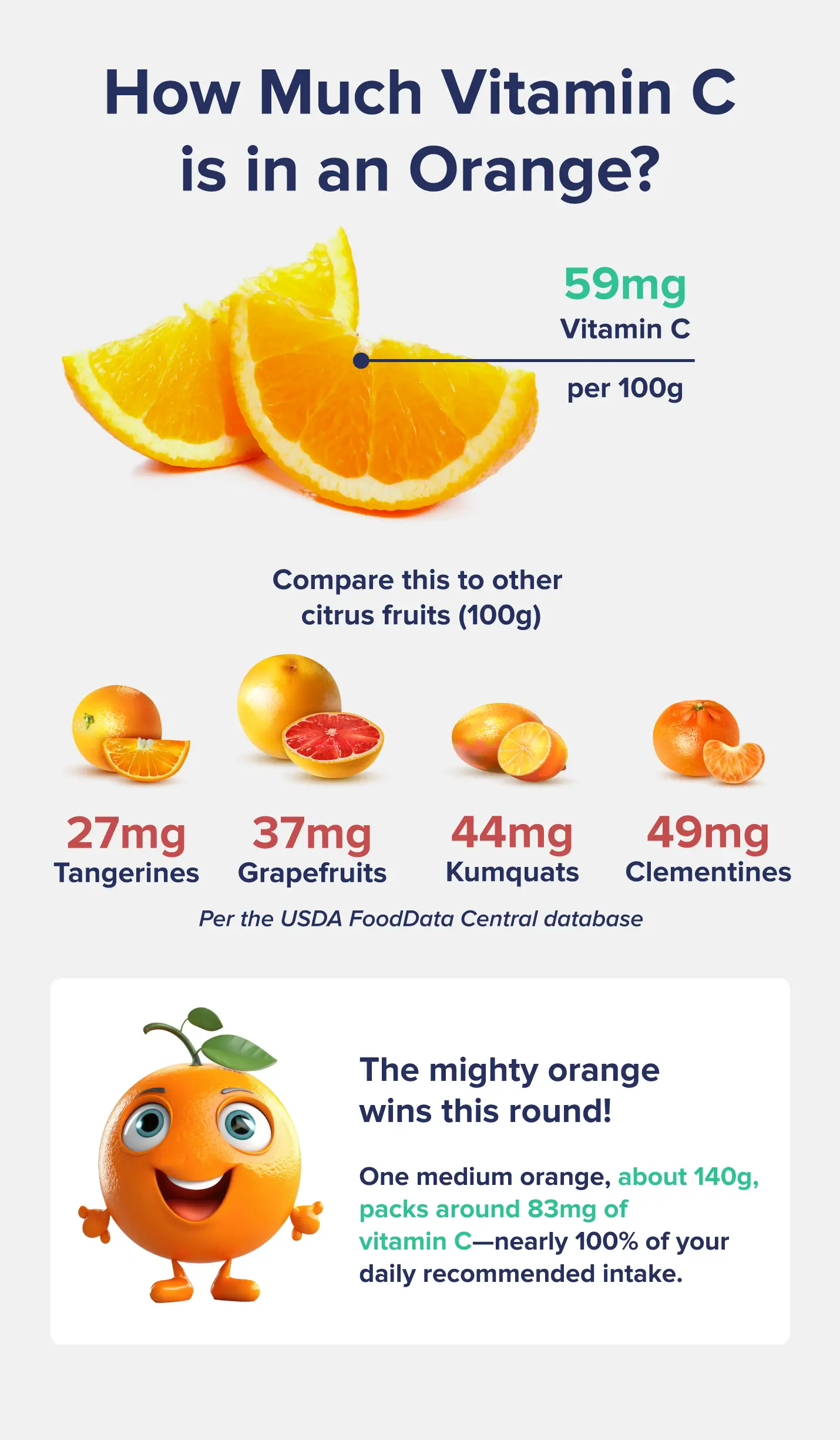
Per the USDA FoodData Central database, an orange weighing 100g contains about 59mg of vitamin C.
Compare this to other citrus fruits (100g):
Grapefruits 37mg
Tangerines 27mg
Clementines 49mg
Kumquats 44mg
The mighty orange wins this round!
Also, consider that one medium orange is actually around 140g, which contains about 83mg of vitamin C. This is almost 100% of your daily recommended intake of vitamin C.
Now, if we’re talking about oranges, we also have to mention orange juice for a couple of reasons.
One, some people just may not enjoy eating oranges. They can be messy, sticky, and leave stringy bits in your teeth—a sensory nightmare for some and just plain difficult to eat for smaller kiddos.
Two, it can be difficult for some individuals to peel oranges without a helping hand or a handy tool like this thing.
A good alternative if you fall into either of these categories would be orange juice––1 cup (8 fluid ounces) of 100% freshly squeezed orange juice contains about 76mg of vitamin C.
That being said, orange juice naturally contains a high amount of sugar––about 20g per cup––and some brands add additional sugar.
Whole oranges also contain more dietary fiber than the amount found in orange juice, which is helpful for digestion.
Knowing this, it’s best to drink orange juice in moderation and always vary your sources of vitamin C.
Try eating other foods high in vitamin C, like fresh fruits––such as kiwis and pineapples––and veggies––like red and green bell peppers.
So here’s the golden question: does eating a whole orange actually deliver a full daily serving of vitamin C?
Well, as we mentioned, just one medium orange has about 83mg of vitamin C.
Per the Institute of Medicine Food and Nutrition Board, the recommended dietary allowance for vitamin C for adults is between 75 to 90mg per day for adult women and men, respectively.
Following that recommendation, eating a whole orange will almost certainly satisfy your daily vitamin C requirements, especially if the fruit is on the larger side.
Since vitamin C is a water-soluble vitamin––meaning it cannot build up in the body like fat-soluble vitamins––getting enough of it every day is very important.
While a vitamin C deficiency is rare, it is surprisingly common to be vitamin C-depleted, which can lead to symptoms such as fatigue, depression, and slow wound healing.
By eating just one orange a day, you can almost certainly avoid becoming vitamin C deficient (barring any underlying conditions, of course).
When it comes to their health benefits, oranges are mostly known for their vitamin C content.
This is important because getting enough vitamin C is vital for the healthy function of our immune systems and can prevent illnesses like scurvy.
When you’re getting enough vitamin C, you will experience:
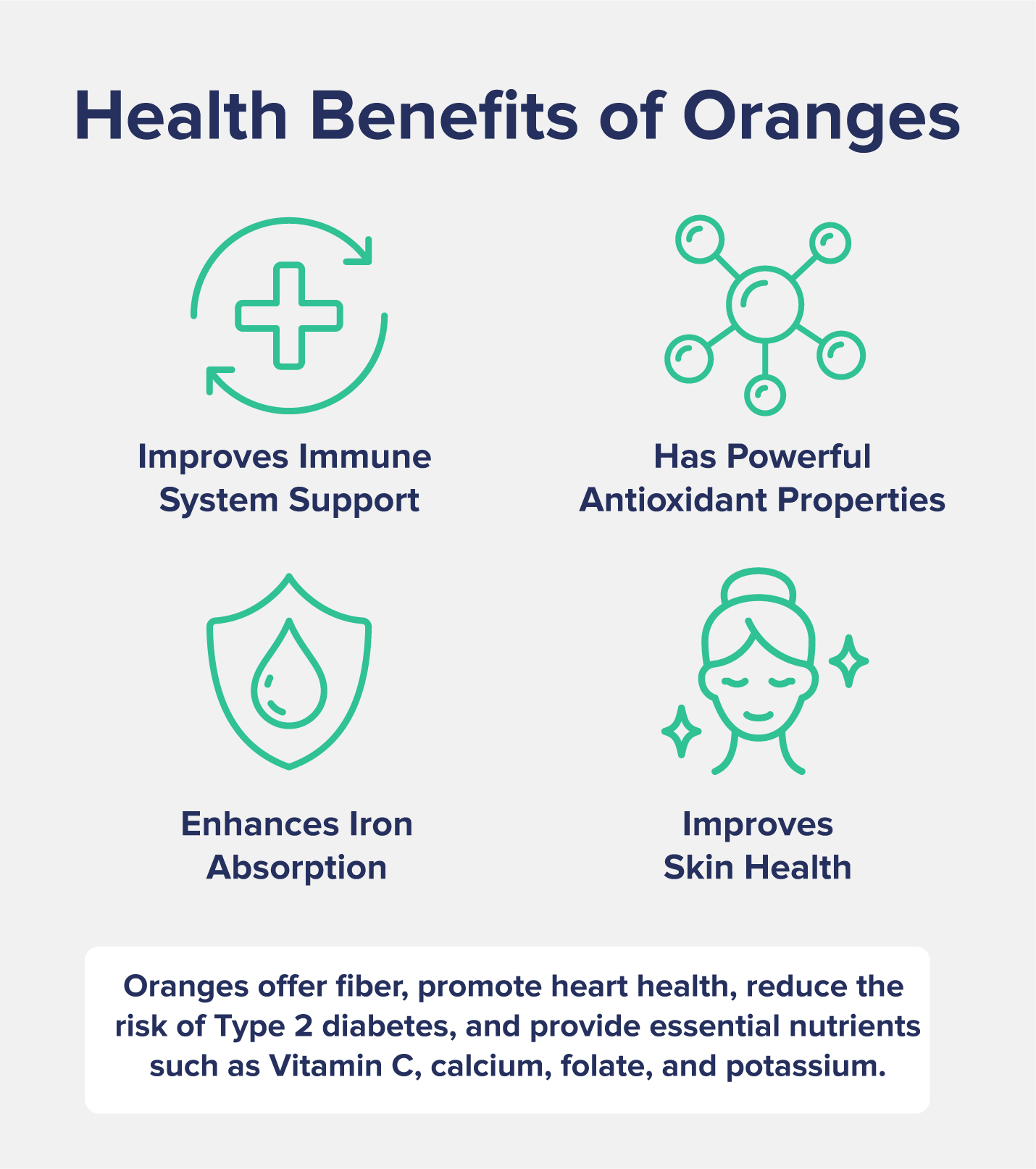
But this citrus fruit is no one-trick pony! Oranges are also a great source of dietary fiber, are shown to improve cardiovascular health, may reduce the risk of developing type 2 diabetes, and are also a good source of calcium, folate, and potassium.
Yes, one orange a day has enough vitamin C to satisfy the daily recommended intake of vitamin C. However, it doesn’t hurt to eat more vitamin C from other sources in your diet, such as fresh fruits and vegetables like kiwis, pineapples, and red and green bell peppers.
Citrus fruits like oranges, grapefruits, and mandarins are typically the most accessible (readily available and palatable) source of vitamin C. However, Kakadu plums, guava, and mangos are other examples of fruits very high in vitamin C, even more so than oranges. That said, these aren’t fruits you’ll typically find in your local grocery store. Kiwis are also very high in vitamin C and a bit easier to find in the fresh produce section.
Since there is about 83mg of vitamin C in an orange, you would have to eat a little more than 12 oranges to reach 1000mg of vitamin C. Unless you’re trying to break a local record, we don’t recommend eating 12 oranges in one day, much less one sitting. If, for some reason, you want to consume this amount of vitamin C in a day, you’d be better off taking a supplement such as the Hi-Health Vitamin C 1,000mg capsules.

Check out these 11 foods to add to your New Year’s shopping list for a healthier body and brain.
Read More
Betaine HCl naturally boosts gastric acidity to fight back against indigestion, but that’s not all it’s good for.
Read More