
I'm Looking for...
This post contains links through which we may earn a small commission should you make a purchase from a brand. This in no way affects our ability to objectively critique the products and brands we review.
Evidence Based Research To fulfill our commitment to bringing our audience accurate and insightful content, our expert writers and medical reviewers rely on carefully curated research.
Read Our Editorial Policy
As the most abundant protein in the body, collagen provides a structural framework for our skin, bone, muscles, tendons, and cartilage.
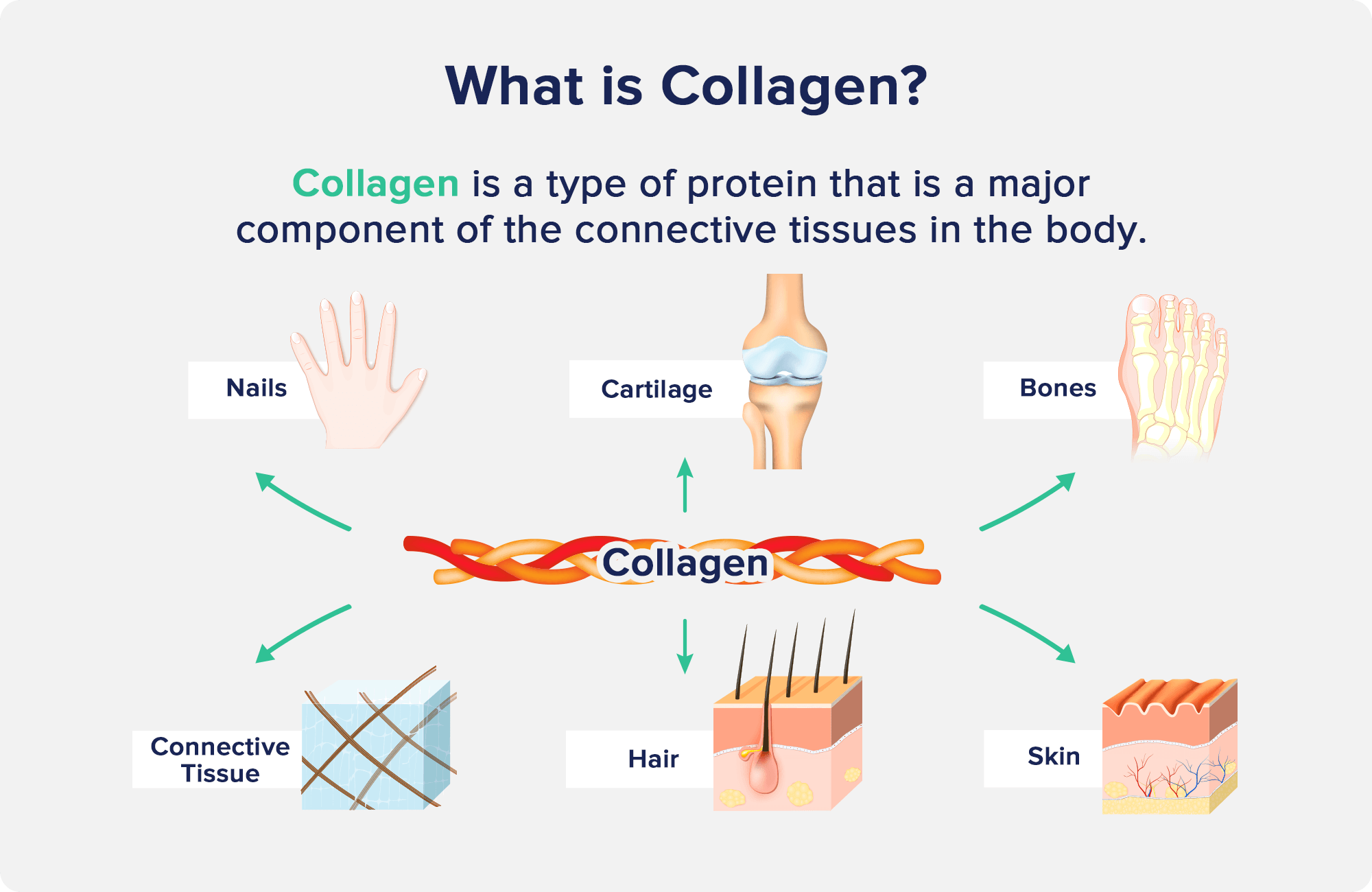
But it’s not just found in humans—collagen is also an essential structural protein for cows, chickens, pigs, and some marine species like fish.
Although humans produce about 1% less collagen each year after turning 40, collagen supplements are now easily accessible, with the most popular form being bovine collagen.
In this article, we’ll guide you through everything you need to know about bovine collagen, including its top four health benefits, different types of supplements, and how to use bovine collagen.
Although the term bovine can refer to cow, yak, antelope, bison, or water buffalo, bovine collagen primarily comes from cows.
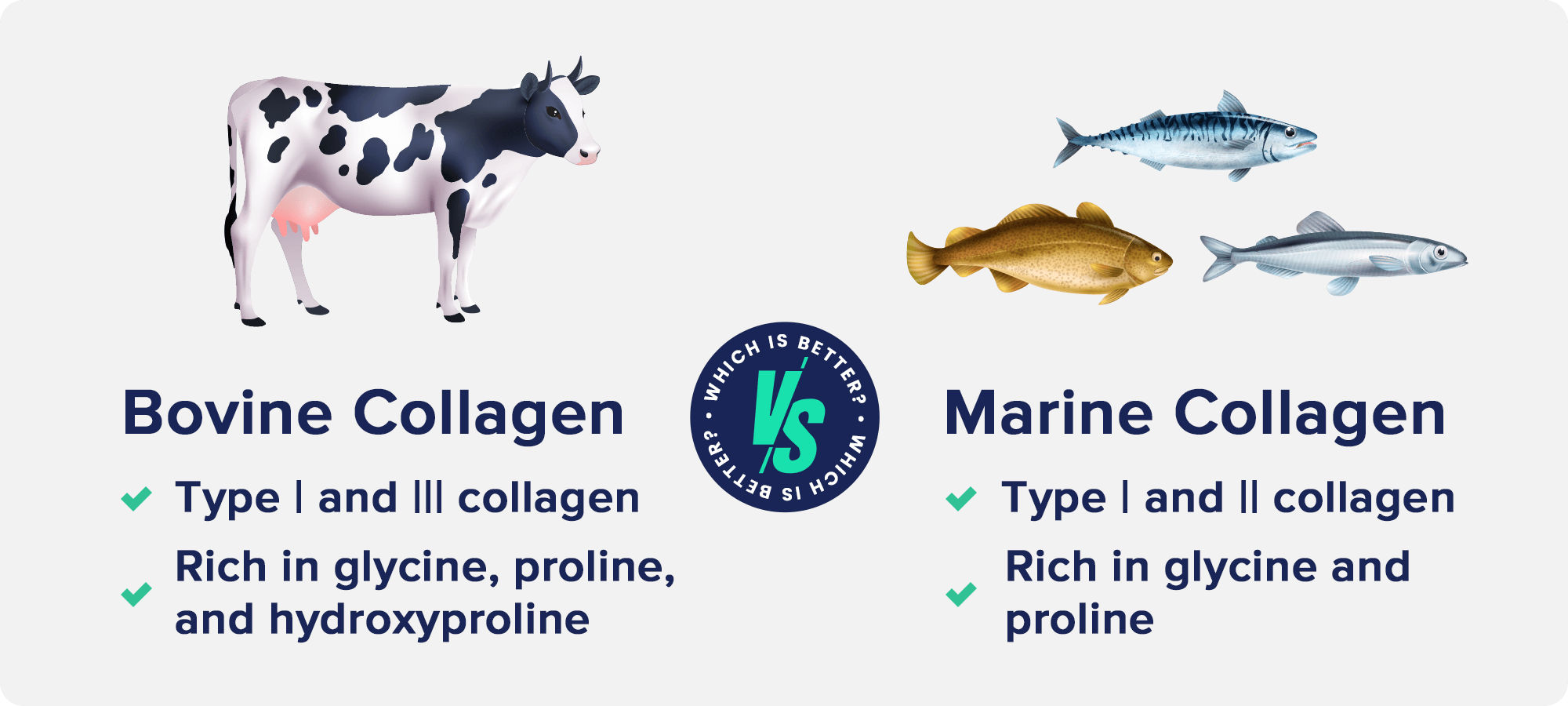
Bovine collagen is made by boiling cow bones, connective tissue, cartilage, or hides in water (yum!), after which the collagen is extracted, dried, and made into a powdered form.
Although there are many similarities between bovine and marine collagen, the primary types of collagen present in the two can differ.
Almost 30 types of collagen exist in the body, but the main types are I, II, III, and IV.
Bovine collagen is rich in types I and III collagen, while marine sources provide more of type I and II.
As the collagen in our skin is mainly made up of types I and III collagen, bovine collagen may be the best option for supporting skin health, including increasing hydration and elasticity and reducing wrinkles.
Types I and III are also beneficial for supporting our bones, muscles, tendons, ligaments, digestive tract, and blood vessels.
Bovine collagen contains 18 amino acids, three of which are particularly important and hard to find elsewhere in the diet—glycine, proline, and hydroxyproline.
These three amino acids are the building blocks of our body’s collagen, helping with tendon and ligament structure, supporting immune function, and reducing inflammation.
However, keep in mind that bovine collagen—and all collagen sources—are not complete proteins, meaning it does not contain all nine essential amino acids.
The most-studied aspect of collagen is likely its relationship to skin health.
Collagen is a major component of the extracellular matrix, a structural component of the skin’s dermis.
With age, collagen becomes fragmented rather than compact, which reduces the skin’s elasticity and can contribute to wrinkles.
The proline and hydroxyproline in collagen improve skin elasticity by stimulating the growth of dermal fibroblasts—cells that generate connective tissue and elastic fibers.
In a 2021 meta-analysis, researchers combined data from 19 studies, finding that people who took hydrolyzed collagen supplements for an average of 90 days had improved skin hydration and elasticity with wrinkle reduction compared to people taking a placebo.
In another study, women aged 40 to 60 who consumed a drink containing 1g of type I collagen peptides—the type found abundantly in bovine collagen—daily for 12 weeks experienced improvements in skin hydration and elasticity and reductions in the appearance of wrinkles.

Collagen is necessary to maintain the elasticity and firmness of our tendons and ligaments—and a breakdown in these tissues can lead to joint pain or disorders like osteoarthritis.
Although type II collagen is the form most often associated with our joints, type III is also important, as a small but significant amount of this type is deposited in our joints’ articular cartilage.
In a 2017 study, young athletes who took 5g of collagen peptides daily for 12 weeks experienced significant reductions in pain intensity while exercising compared to those who took a placebo.
Plus, research with people with knee osteoarthritis who took 5g of bovine collagen twice per day for 13 weeks had significant improvements in their symptoms.
Lastly, an animal study of mice with osteoarthritis found that type I collagen supplementation reduced inflammation in knee joints, preserved cartilage, and increased chondrocyte numbers—cells that produce and maintain the extracellular matrix and cartilaginous tissues within joints.

Collagen, mainly type I, accounts for about 80% of the total protein mass of the skeleton.
Although most younger people tend to have strong bones, older adults—including 54% and 30% of postmenopausal women—are respectively afflicted by low bone mineral density (osteopenia) and severe bone loss (osteoporosis).
In a randomized controlled trial published in Nutrients, postmenopausal women who supplemented with collagen for 12 months showed increased spine and femoral bone mineral density and increased blood levels of a bone formation protein.
These outcomes suggest that supplementing with collagen may play a role in maintaining healthy bones.

Collagen may prevent brittle nails and support hair growth, although this research is inconclusive.
One study found that supplemental collagen increased nail growth rate by 12% and decreased the frequency of broken nails by 42% after the 24-week study.
However, the potential of collagen to increase hair growth is primarily anecdotal—we don’t yet have evidence-based research.
But the theories behind collagen’s role in supporting hair growth are relatively solid.
The main protein component of hair is keratin, which contains large amounts of the amino acids glycine and proline that are found in collagen.
When the body lacks keratin, hair loss or thinning occurs—so collagen consumption could, in theory, help with keratin production.
Plus, collagen may help support the hair follicle.
Hair follicles consist of epidermal and dermal components (found in our skin’s top and middle layers).
In the dermis, the dermal sheath (where the hair root is found) is made up of 70% collagen —therefore, it’s plausible that providing your body with collagen may help maintain a healthy dermis and support hair growth.

Hydrolyzed bovine collagen and gelatin are the two primary forms of bovine collagen found in supplements.
Although both have the same levels of protein and amino acids, they have different structures.
Hydrolyzed collagen—also called collagen hydrolysate or collagen peptides—is collagen that has been broken down into smaller units of protein (peptides).
As these bits are smaller, hydrolyzed collagen is easier for our bodies to digest and absorb—and they are also easier to dissolve in liquids, making it more convenient to consume.
On the other hand, gelatin is sometimes referred to as “cooked collagen,” as it’s obtained from heating collagen.
The main difference between gelatin and collagen is that gelatin only dissolves in hot water and forms a gel-like substance.
In contrast, collagen can dissolve easily in various liquids at different temperatures.
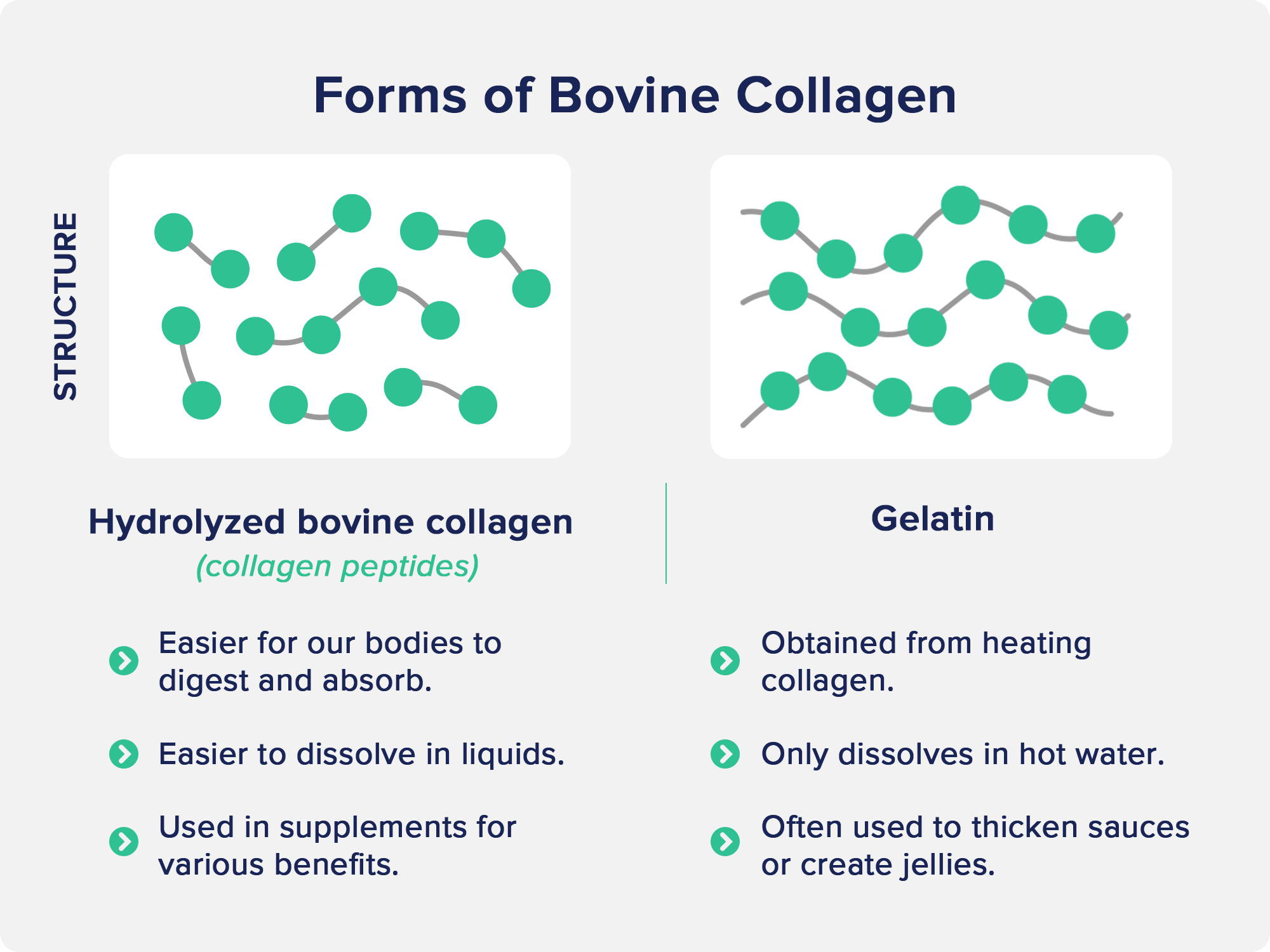
For these reasons, gelatin is commonly used to thicken sauces or create jellies (yep, that’s where JELL-O comes from).
Bovine collagen is most often found in powder form, but you can also find it in capsules, beverages, and gummies.
A few of our favorite bovine collagen supplements include:
Bovine collagen is the most accessible form of supplemental collagen, but both bovine and marine collagen can provide different benefits.
As bovine and marine collagen contain varying amounts of different types of collagen, bovine is most often used for skin, hair, and nail health, while marine collagen may work best for joint health.
Although results from evidence-based research can vary, many studies support the use of collagen for skin health, including reducing wrinkles and increasing elasticity or hydration.
The evidence is weaker for using bovine collagen for joint, bone, hair, and nail health, but enough studies support its use—without causing significant side effects—to recommend it.
Bovine collagen is rich in types I and III collagen, making it best for supporting skin health, including reducing wrinkles and increasing elasticity or hydration.
Bovine collagen has received a generally recognized as safe (GRAS) designation from the FDA, and side effects are rarely noted.
High doses of collagen (especially in the form of gelatin) may cause bloating or stomach upset.
However, most people do not experience side effects from supplemental collagen—but people with beef allergies should stay away.
With all the recent buzz about 10-year-olds in Sephora raiding the makeup and skincare aisles with their Christmas money, the internet has had basically one burning question (or rather concern) on our minds:
Read More
What brown sugar substitute can you use when you’ve already preheated the oven and cracked the eggs, only to realize you’re fresh out?
Read More